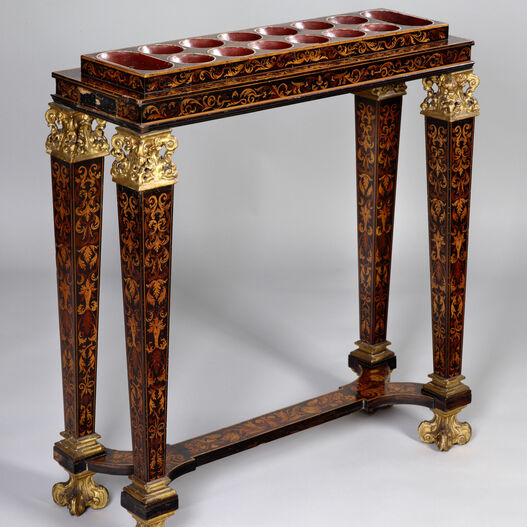
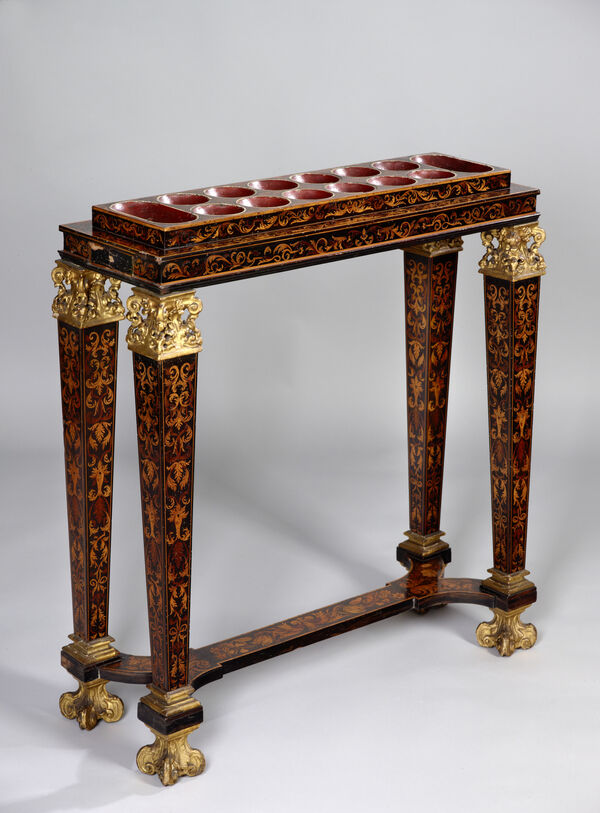
Formally, the bean game is a narrow table with several rounded hollows. It can be played with beans, stones, grains, shells, small pebbles or other items. The moves are made using mathematical strategy; there is no element of chance.
The bean game has a centuries-old history. Known as mancala, kahla or awelé, it was first played in West Africa and the Ottoman Empire, where it had a variety of symbolic meanings. With the spread of Islam, the game reached Asia and, with the slave trade, America. Around 1700, it was an exclusive pastime of aristocratic society in German-speaking countries.
The Charlottenburg version was made for Queen Sophie Charlotte. The game table and the communal playing were intended to inspire admiration for the hostess's cosmopolitanism. Today, several initiatives in Africa support the further development of the game in order to promote the preservation of pre-colonial traditions.