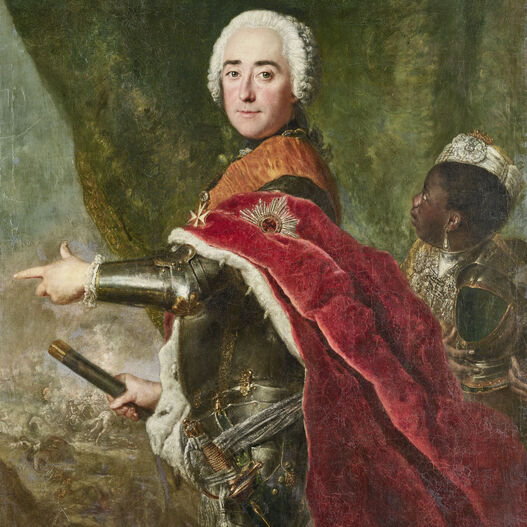
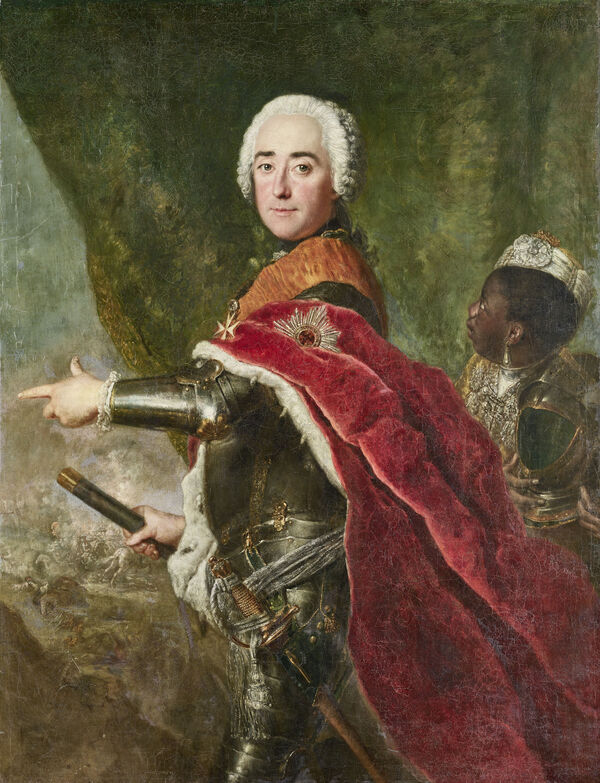
This portrait of Margrave Karl Friedrich Albrecht (1705–1762), painted around 1745, shows a composition that was frequently used at the time: the ruling nobleman – usually the person who commissioned the painting – stands in the foreground. The Black servant assisting him stands in the background or follows him. Other princes also used this type of pictorial staging of their power in the 17th and 18th centuries.
The people depicted behind European princes and princesses in this and similar portraits are difficult to identify. The images do not allow any direct conclusions to be drawn about the age, position and legal status of the individuals. Unlike the main subjects of the portraits, they remain anonymous.
However, the paintings prove the existence of Black people at European courts. Whether they were enslaved or free requires further investigation and can be determined from various details, among other things. Silver collars, which Black servants often wore around their necks in the paintings, were a probable symbol of dependence.
The page standing next to Margrave Karl Friedrich Albrecht von Brandenburg-Schwedt wears a magnificent livery made of yellow satin. The silver tassels on his clothing shine in the light, as does the metal collar. The latter is not hidden, but rather accentuated by the shine of the margrave's helmet and armour.